Adaptive clothing works harder than ordinary apparel. Magnetic plackets, Velcro tabs, side zippers, stretch panels, and smooth seated-wear fabrics take on daily friction, frequent washing, and repeated on/off cycles. Good care protects those features so garments stay comfortable, secure, and presentable for longer.
This guide covers practical washing, drying, Velcro, magnetic closure, and storage habits that extend the lifespan of adaptive clothing—without turning laundry day into a complicated chore.
Read the Label—Then Build a Simple System
Care labels still matter. Fiber content, maximum temperature, and dryer guidance should lead your process. Once you know the basics for each garment family, build a repeatable system:
- Sort adaptive pieces by temperature and fabric weight
- Close closures before washing
- Use mild detergent and gentler cycles for stretch and technical details
- Air-dry when shape and elasticity matter most
A simple system beats perfection. Consistency is what keeps waistbands springy, straps grippy, and colors brighter over months of use.
Washing Adaptive Clothing the Right Way
Use cooler water
Warm or hot water can break down elastane, fade dark colors, and stress adhesives used in some adaptive constructions. Cold or cool water is usually enough for everyday soil and is kinder to stretch fibers.
Choose mild detergent
Fragrance-heavy or harsh detergents can irritate sensitive skin and leave residue in knits. A mild liquid detergent dissolves cleanly and rinses well. Avoid over-pouring; extra soap does not mean cleaner clothes, but it can leave fabrics stiff.
Close snaps, magnets, zippers, and Velcro first
Open closures bang against drums, snag knits, and collect lint. Closing them before the wash protects both the adaptive hardware and everything else in the load. Turn Velcro tabs onto their matching surfaces whenever possible.
Turn garments inside out
Inside-out washing reduces surface abrasion on the side people see and helps preserve print, color, and outer texture. It also keeps rough hook-side Velcro from scrubbing neighboring fabrics as aggressively.
Prefer gentle cycles for stretch and seated-wear pieces
High-agitation cycles age elastic and can twist garments with asymmetric openings. A gentle or permanent-press cycle is usually a better default for adaptive tops, pants, and cardigans.
Drying Without Damaging Fit or Closures
Heat is one of the fastest ways to shorten adaptive garment life. High dryer heat can:
- Relax elastic waistbands and cuffs
- Warp foam or coated components
- Weaken certain laminated or bonded details
- Cause shrinkage that makes dressing harder
Whenever practical, reshape garments and air-dry flat or on a sturdy hanger. If you use a dryer, choose low heat and remove pieces while slightly damp to finish air-drying. Never iron directly over Velcro, magnetic closures, or exposed snaps.
Fabric Care by Adaptive Category
Stretch knits and everyday tops
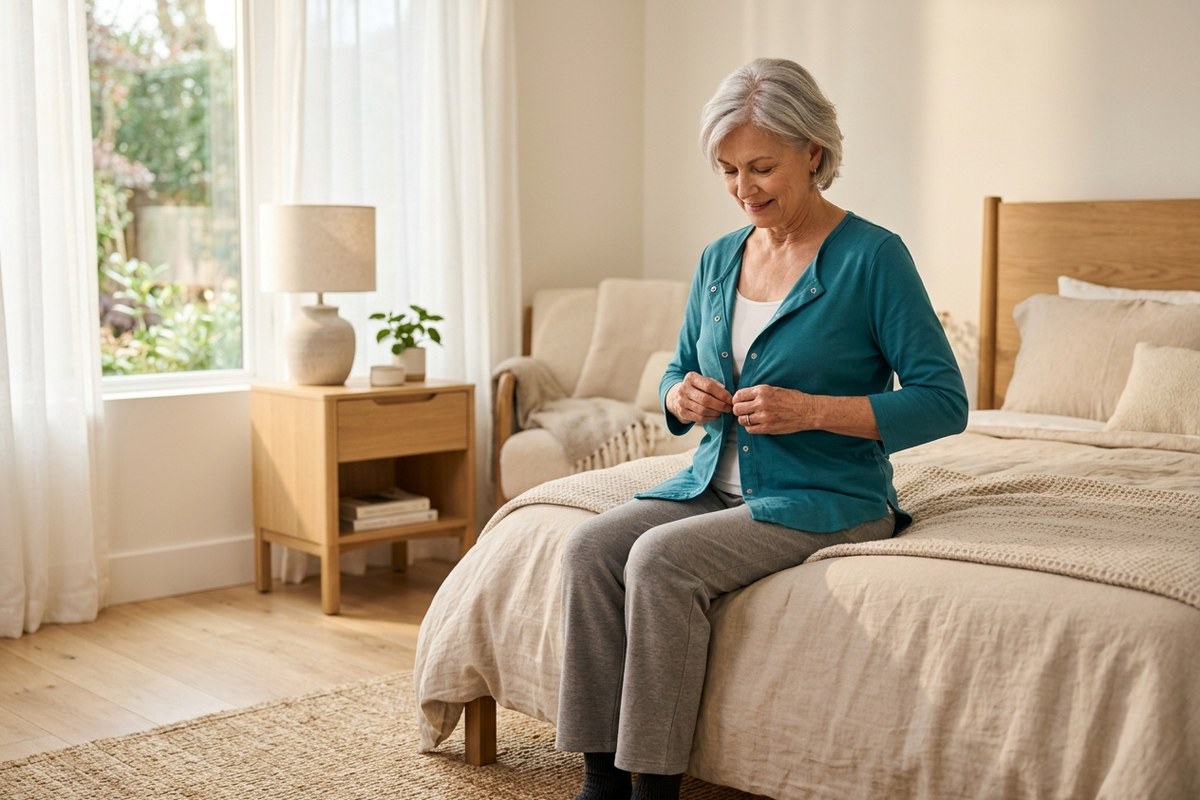
These are the workhorses of many adaptive wardrobes. Wash cool, skip heavy softeners that can reduce wicking, and avoid hanging heavy wet knits in a way that stretches shoulder seams. Magnetic and snap plackets should be closed so fronts stay aligned.
Pants and seated-wear bottoms
Side-zip pants and soft seated-wear bottoms benefit from gentle cycles and low abrasion. Check zippers before washing; debris in teeth creates wear. Smooth fabrics used for longer sitting should be rinsed thoroughly so detergent residue does not increase skin friction.
Outerwear and layering
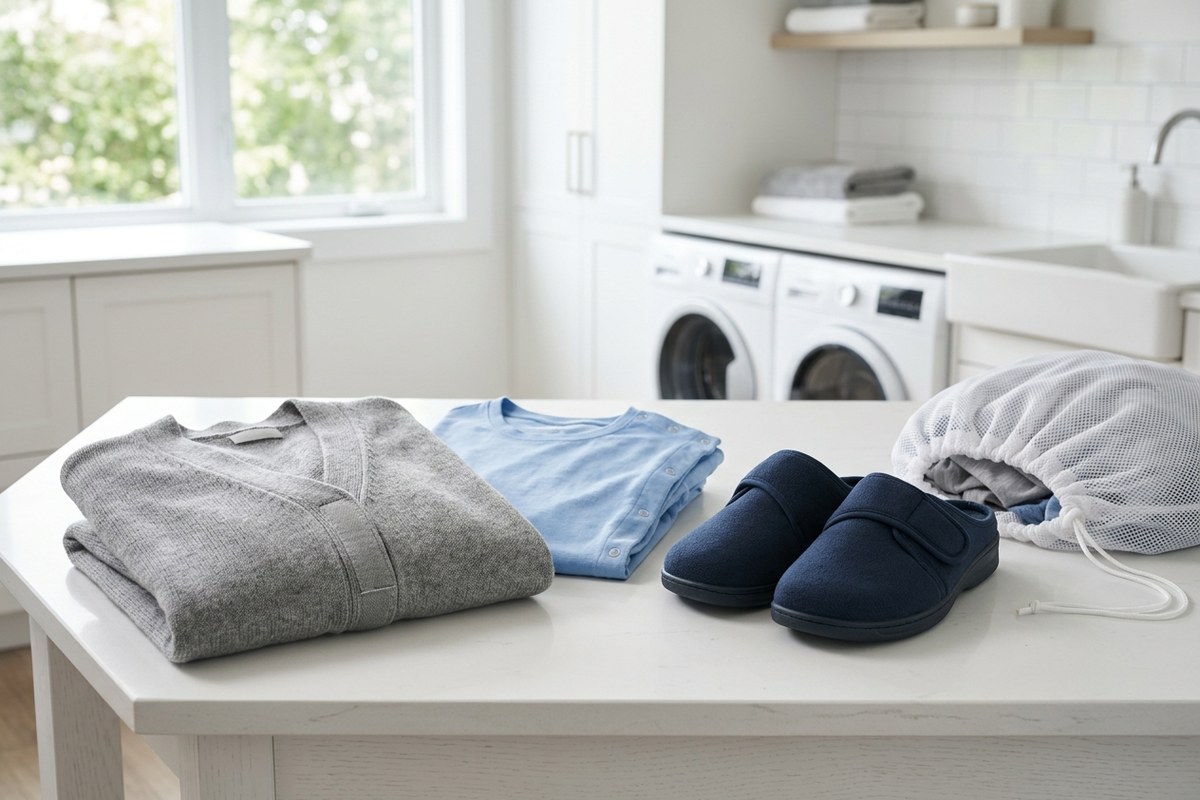
Cardigans, wraps, and light jackets often combine knit bodies with adaptive closures. Empty pockets, close fasteners, and wash inside out. Spot-clean minor soil between full washes to reduce total laundry cycles on structured pieces.
Velcro Maintenance That Actually Works
Velcro fails early when it fills with lint and thread. Keep it functional with a quick routine:
- Close Velcro before washing whenever possible
- After drying, inspect hook sides for fuzzy buildup
- Clean hooks with a soft brush, fine-tooth comb, or dedicated Velcro brush
- Keep hook sides off delicate knits during storage
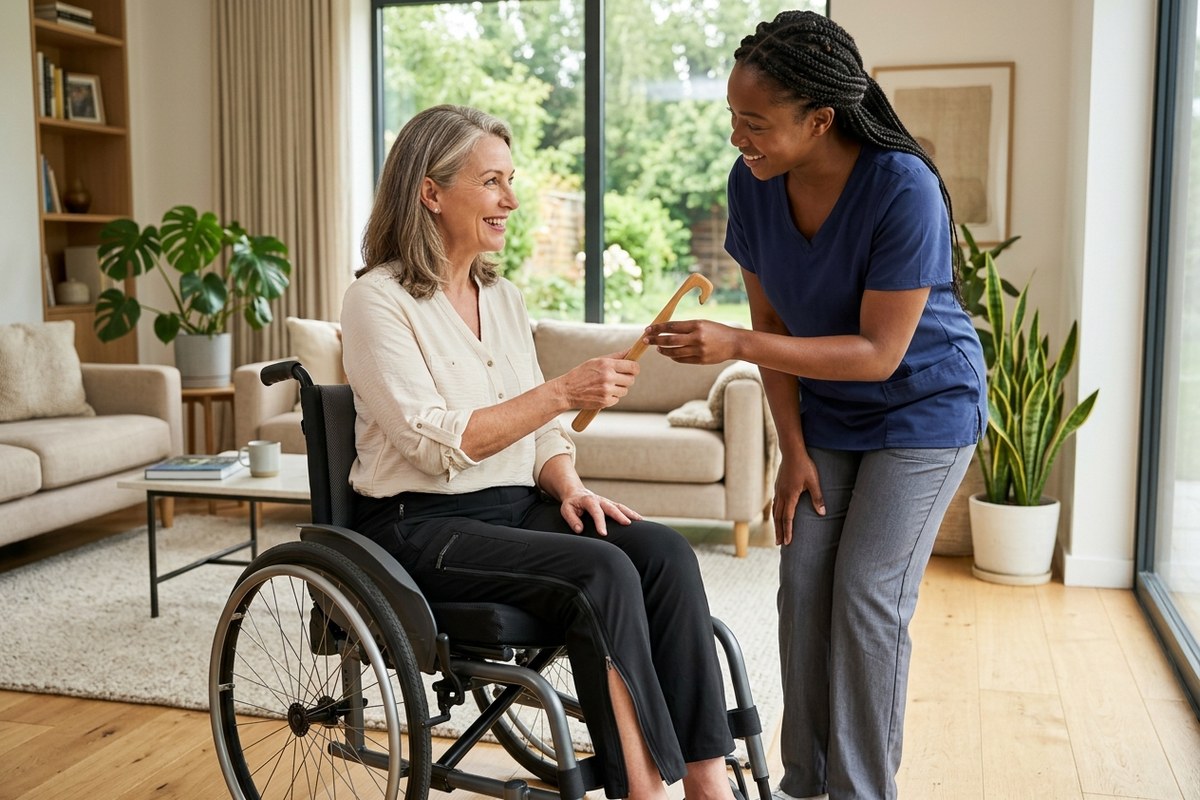
If a strap still closes but peels too easily, cleaning often restores grip. Replacement sew-on tape is a last resort; many closures rebound once lint is removed. Teach caregivers and wearers to open straps fully before use—yanking half-open tabs accelerates wear.
Caring for Magnetic and Snap Closures
Magnets and snaps are low-maintenance compared with buttons, but they are not no-maintenance.
- Keep magnets free of stuck pins, hairpins, or metal debris
- Do not hammer or bend snap components back into place
- If a magnetic placket misaligns, check for twisted fabric before assuming hardware failure
- Avoid high-heat ironing over closure zones
If a snap loosens, repair early. A failing closure that is forced daily can tear surrounding fabric and turn a simple fix into a ruined garment.
Proper Storage Extends Wear Life
How clothes rest between wears matters:
- Store fully dry only—moisture invites odor and mildew
- Hang structured tops and cardigans; fold heavily stretched knits if hangers distort shoulders
- Close or cover Velcro so it does not cling to neighboring clothes
- Avoid cramming side-zip pants tightly where zippers leave impressions
- Keep a breathable laundry hamper; sealed damp bags shorten fabric life
For travel, pack closure covers or fasten adaptive openings so garments arrive ready to wear, not tangled and stretched.
Footwear and Soft Slipper Care
Adaptive shoes and slippers deserve their own quick protocol:
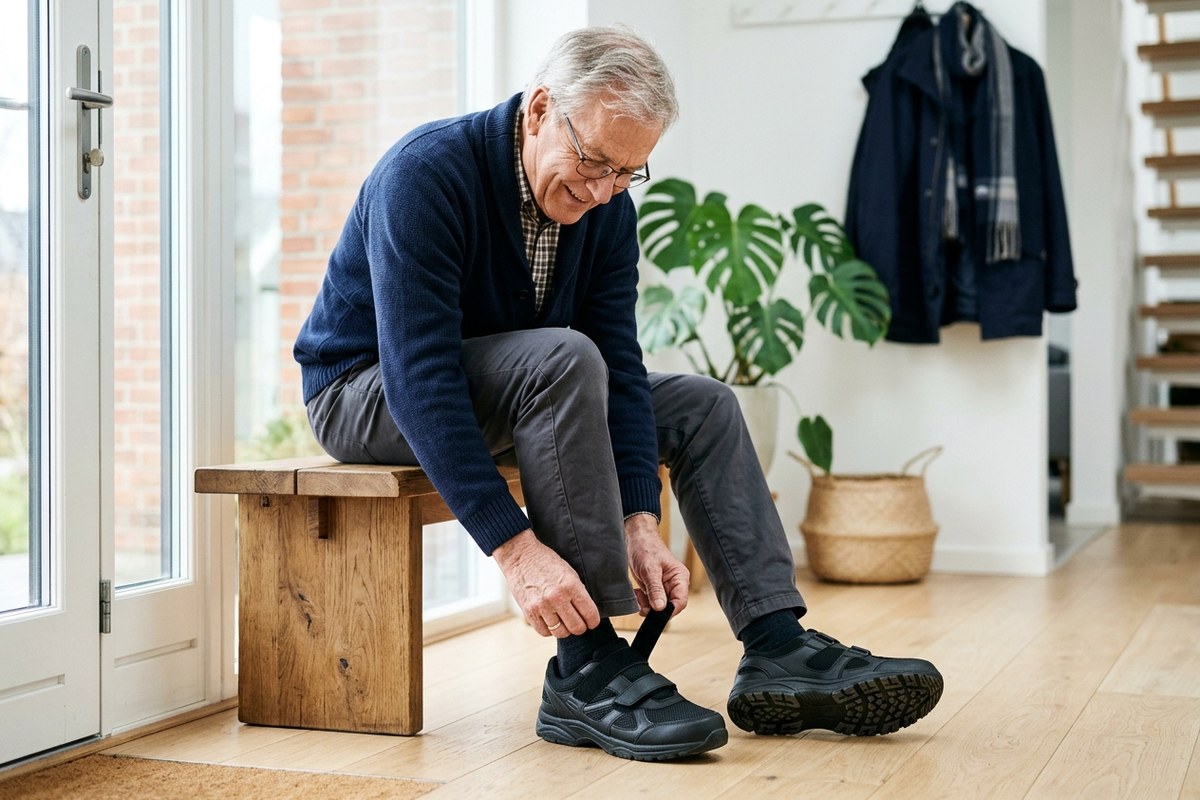
- Open straps fully before each wear to reduce peel stress
- Wipe soles to preserve traction
- Air out after wear; remove insoles when possible
- Clean Velcro the same way you would on garments
- Avoid radiators and high-heat dryers that break down foams
Rotate pairs when you can. Cushioning lasts longer when it has time to recover, and dry shoes are healthier for skin.
When to Repair or Retire a Garment
Extending lifespan includes knowing when a piece no longer supports independence safely:
- Waistbands that no longer recover
- Velcro that will not hold after cleaning
- Zippers that split or snag every wear
- Thin fabric at pressure points for seated users
- Stretched openings that make dressing harder, not easier
Repair when the fabric is still strong and the issue is local. Retire when the garment creates struggle, skin risk, or insecurity. Replacing a worn staple is part of maintaining independence—not a failure of care.
A Weekly Care Routine You Can Keep
- Close all adaptive closures before clothes hit the hamper.
- Wash similar fabrics together on cool, gentle cycles.
- Air-dry priority stretch pieces; low-dry only when needed.
- Brush Velcro and check magnets once a week.
- Restock everyday staples before the last reliable piece wears out.
This routine takes minutes and prevents the most common causes of early adaptive-garment failure.
Protect the Features That Protect Independence
Adaptive clothing earns its value every time someone dresses with less pain, less help, or more confidence. Washing cooler, closing closures, cleaning Velcro, and storing pieces dry are small habits with a large return: garments that keep doing their job.
If you are building or refreshing a wardrobe of easy-care staples, explore our adaptive collections and keep this guide handy for laundry day. For product-specific questions, reach our team on the contact page. Care is not glamorous—but it is how independence stays stitched into daily life.