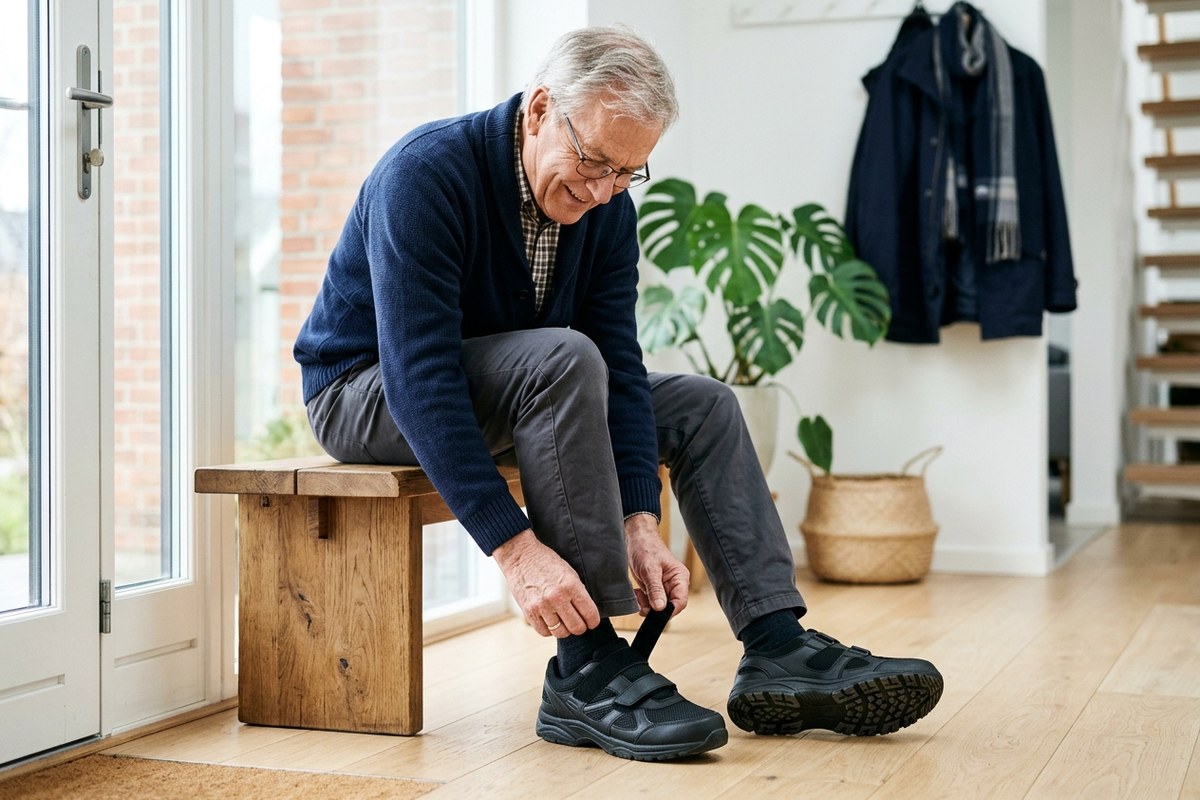
Footwear is one of the highest-impact adaptive upgrades you can make. The right pair can improve balance, reduce fall risk, ease swelling discomfort, and remove the daily struggle of laces or narrow openings. The wrong pair can undermine confidence with every step.
This guide explains what makes adaptive footwear different, which features matter most for seniors and adults with mobility challenges, and how to choose shoes that support real life—at home, on errands, and at appointments. You will also find care tips so your investment lasts.
Why Adaptive Footwear Matters
Standard shoes often assume flexible ankles, strong hands, and feet that stay the same size all day. Many adults do not fit that profile. Arthritis, neuropathy, edema, post-surgical recovery, and balance changes all make conventional footwear harder—and sometimes unsafe—to use.
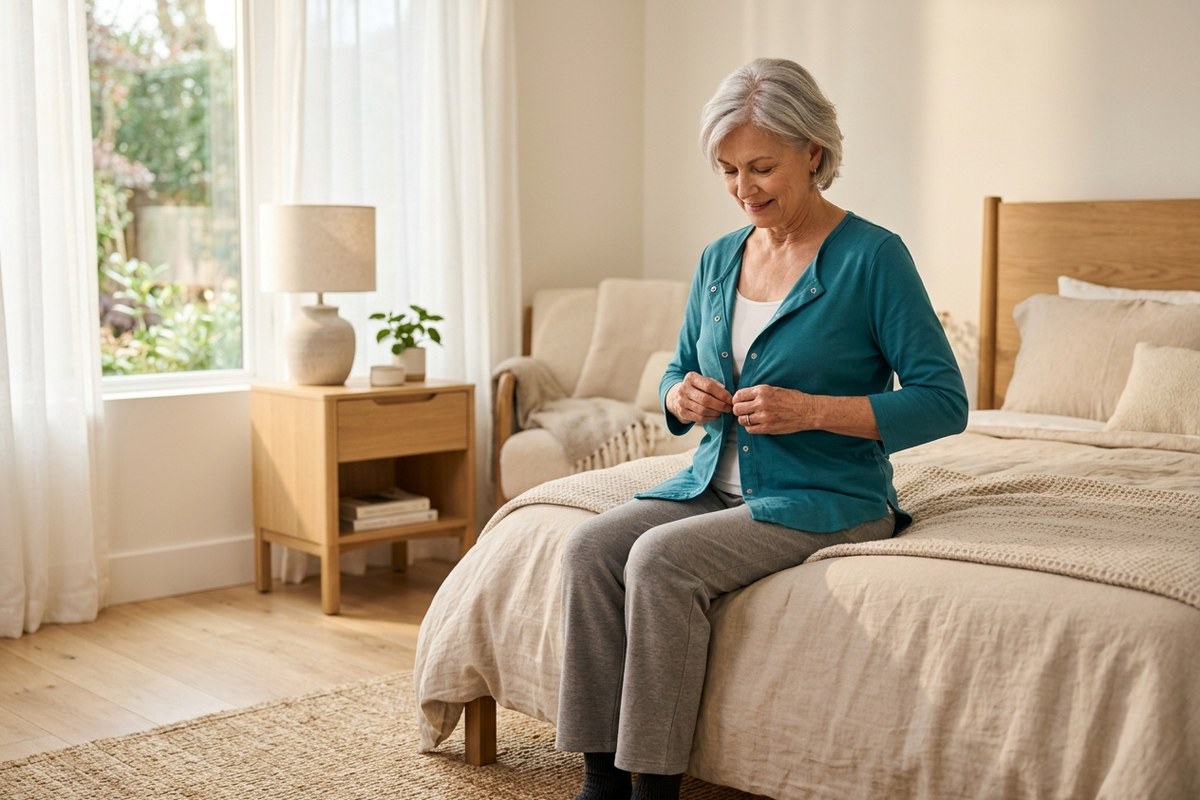
Adaptive footwear is built around those realities. It prioritizes secure footing, easier entry, adjustable fit, and all-day comfort without looking clinical. When shoes are easier to put on and more stable to walk in, people move more. That movement supports circulation, mood, and independence.
Comfort Comes First
Comfort is not only about soft foam. It is the combination of cushioning, breathability, interior seams, and a shape that matches the foot. Look for:
- Cushioned insoles that absorb impact on hard floors
- Soft linings that reduce hot spots and rubbing
- Room in the toe box so toes are not cramped
- Lightweight builds that do not fatigue the legs
If someone already avoids walking because shoes hurt, comfort is the first feature to fix. Pain-free steps encourage longer walks to the mailbox, safer transfers, and more willingness to leave the house.
Slip-Resistant Soles for Everyday Stability
Indoor and outdoor surfaces can be unpredictable—tile kitchens, polished stores, damp sidewalks. Slip-resistant outsoles improve traction and help the wearer feel planted. A good sole should flex enough for a natural stride while still offering a stable platform.
Stability also comes from a secure midfoot and heel. Shoes that heel-slip or twist easily can undermine balance even if the tread looks aggressive. Try shoes on a clean hard floor and pay attention to whether the foot feels centered over the sole.
Wide-Fit Shoes and Swelling Accommodation
Feet often swell during the day, after travel, or with certain health conditions. Wide-fit adaptive shoes and adjustable closures help accommodate that change without cutting off circulation. A roomy toe box can also help people with bunions, hammertoes, or orthotic inserts.
If swelling varies, prioritize adjustability over a single “perfect” static size. Straps and multi-point closures let the same shoe work in the morning and later in the afternoon. That flexibility reduces the need to keep multiple pairs just to get through one day.
Easy Closures Beat Traditional Laces
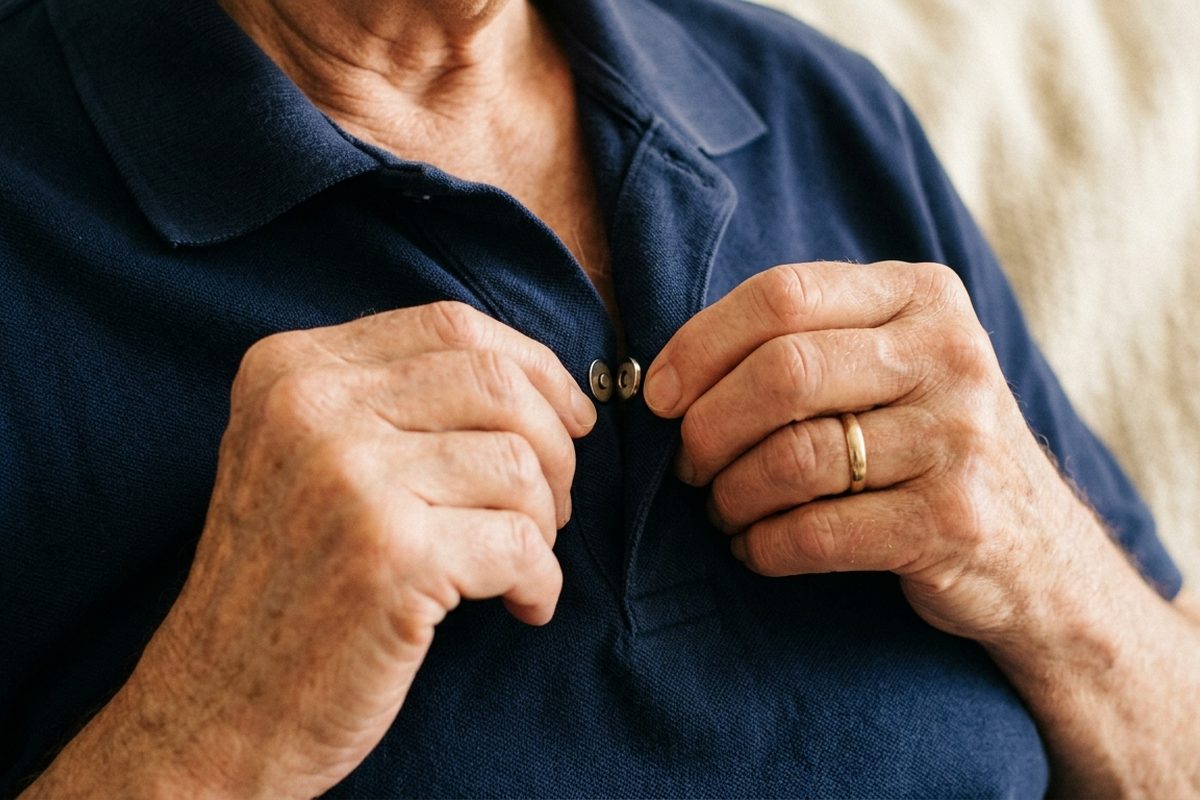
Laces demand finger strength, vision, balance, and time. Adaptive closures replace that friction with options such as:
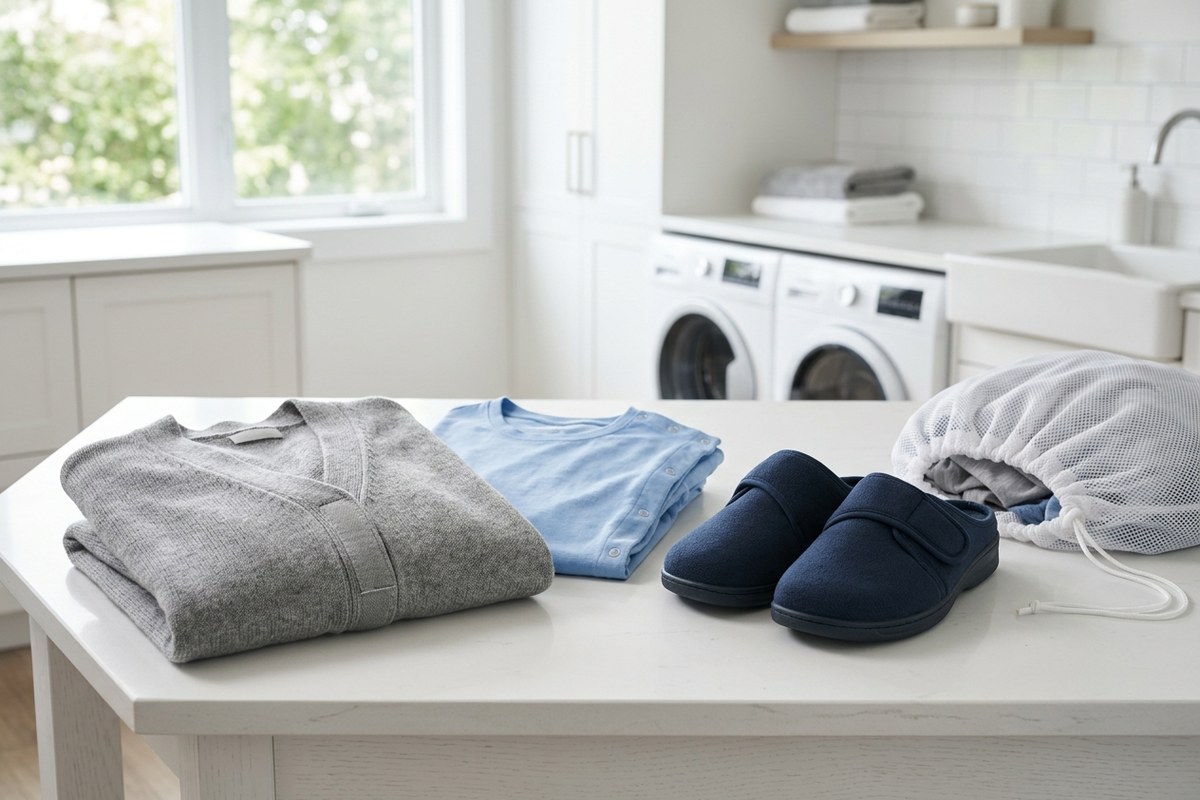
- Wide Velcro straps
- Large hook-and-loop tabs
- Elastic no-tie systems with a secure fit
- Wide openings that the foot can slide into with less bending
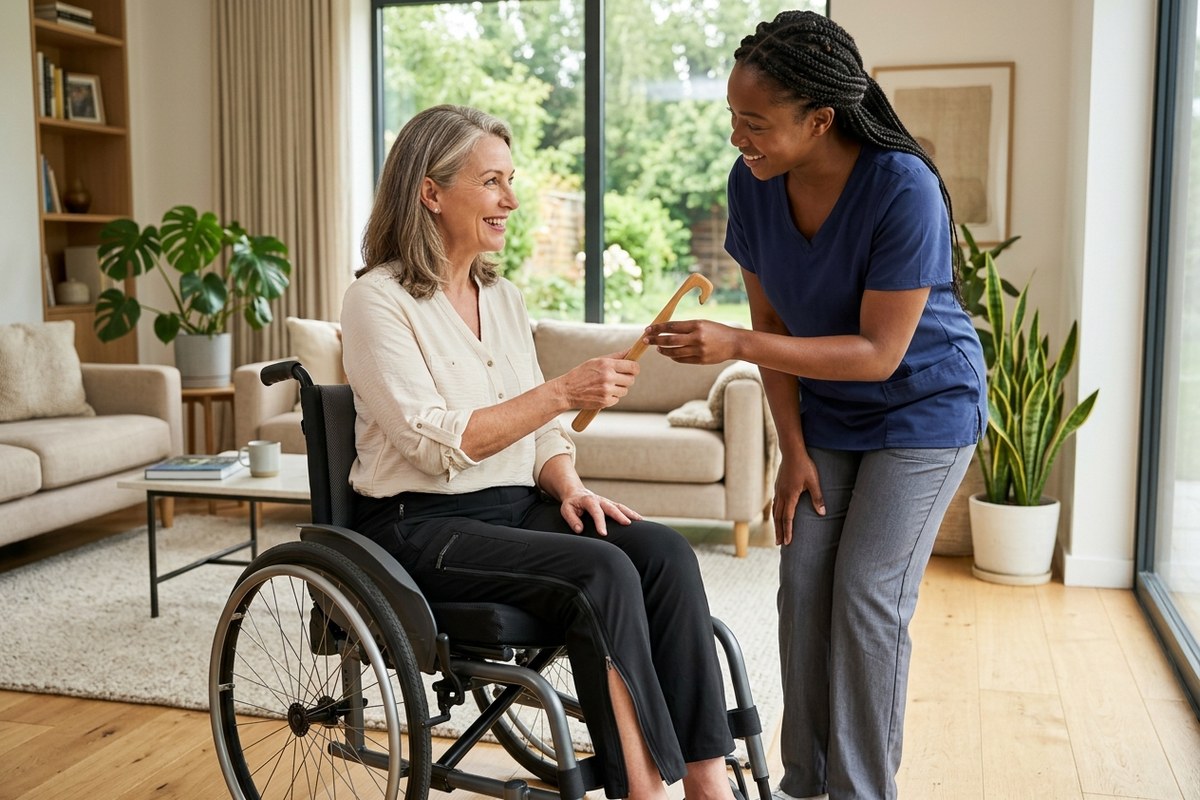
Easy closures are especially valuable for anyone who dresses from a seated position or has tremor, neuropathy, or limited shoulder reach. Pairing easy-entry shoes with a long-handle shoehorn can remove almost all bending from the routine.
Everyday Support Features to Prioritize
Beyond closures and width, strong everyday pairs usually include:
- Heel support: A firm heel counter helps the foot track straight.
- Arch support: Especially helpful for long standing or walking on hard floors.
- Secure midfoot hold: Prevents the foot from sliding forward.
- Low interior friction: Smooth linings protect fragile or diabetic-prone skin.
- Easy cleanability: Wipeable or machine-friendly materials simplify care.
Browse our adaptive footwear collection for styles that combine these features in everyday silhouettes—sneakers, slippers, and easy-on walking shoes designed for real routines.
How to Choose the Right Pair
Use this practical checklist before you buy:
- Identify the main barrier. Is it bending, laces, swelling, pain, or slippery soles?
- Measure later in the day. Feet are often larger after activity.
- Wear usual socks. Thickness changes fit.
- Check both feet. Fit to the larger foot and adjust the other side.
- Test sit-to-stand entry. Can the shoe go on from a chair without a struggle?
- Walk on a hard surface. Listen for heel slip and notice any pressure points.
If orthotics are part of the plan, confirm the shoe has a removable insole and enough depth. For recovery periods, favor adjustable pairs you can loosen around bandages or mild swelling, then tighten as mobility improves.
Care Tips That Extend Footwear Life
Adaptive footwear works hard. Simple care keeps straps, cushioning, and tread performing:
- Open straps fully before putting shoes on to reduce peel stress
- Clear lint and debris from Velcro so closures stay strong
- Air shoes out after wear; avoid high heat that breaks down foams
- Wipe soles and uppers regularly to preserve grip and appearance
- Rotate pairs when possible so cushioning can recover
Replace shoes when tread is worn smooth, midsoles feel compressed, or closures no longer hold securely. Footwear that no longer supports the foot can quietly increase fall risk.
The Bottom Line
The best adaptive footwear for seniors and adults is the pair that is easy to don, secure in motion, and comfortable enough to wear all day. Focus on slip-resistant soles, wide or adjustable fit, supportive structure, and closures that match hand strength and flexibility.
When shoes stop being an obstacle, mobility expands—around the house and beyond. Explore current styles in our footwear collection, or reach out via our contact page if you need help matching features to a specific mobility goal.