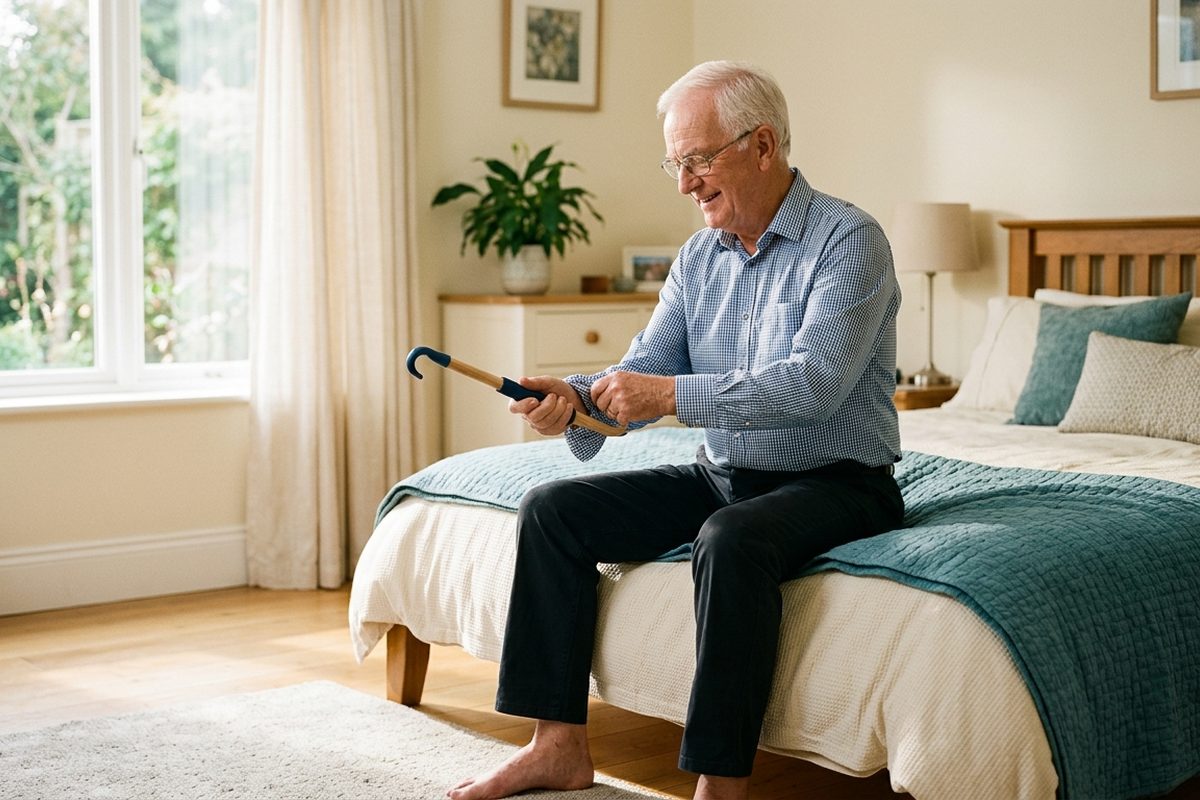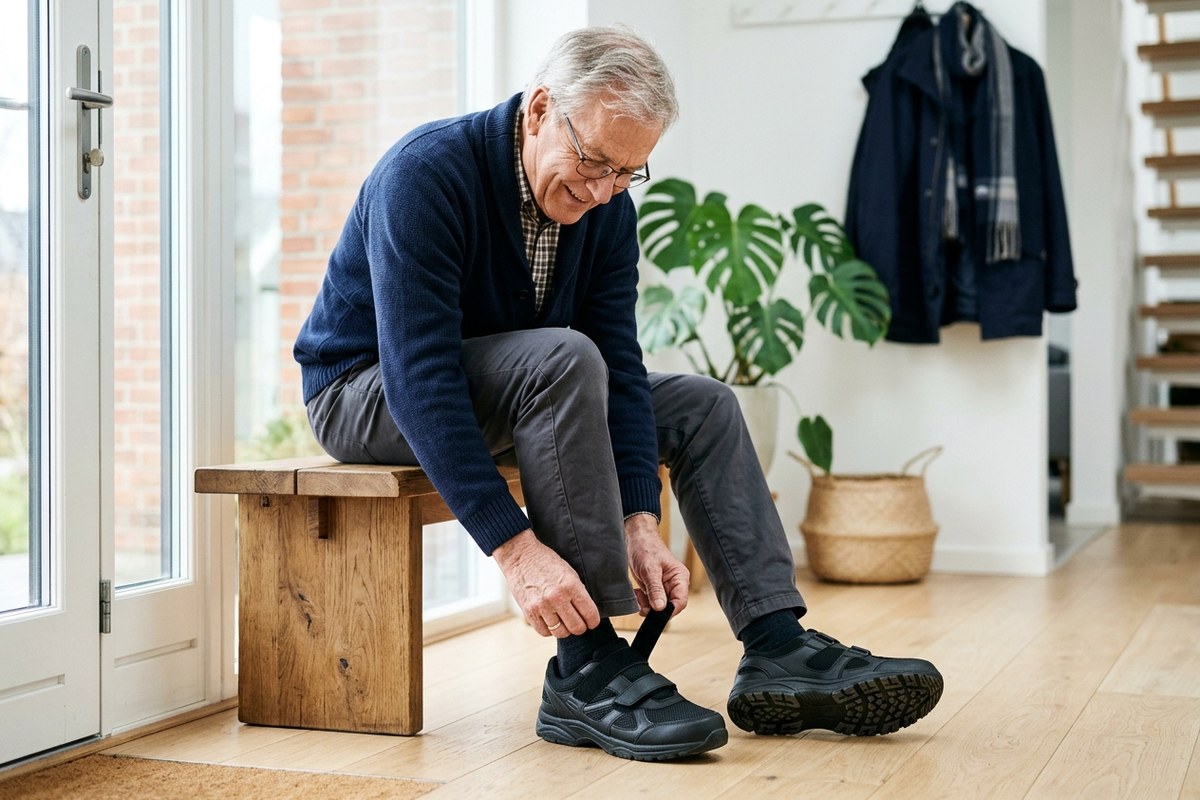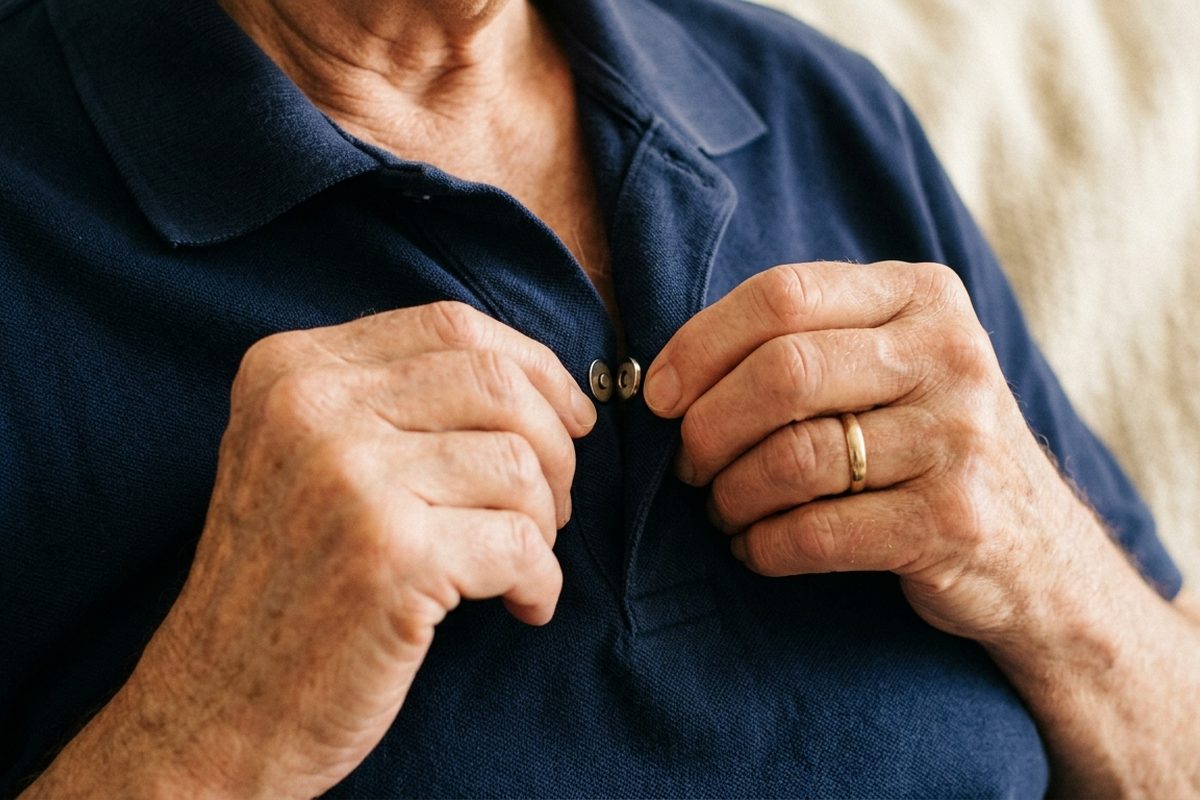
Arthritis affects more than 54 million adults in the United States, making it one of the most common causes of dressing difficulty. The condition causes joint pain, stiffness, swelling, and reduced range of motion—particularly in the hands, wrists, shoulders, knees, and hips. These are the exact joints you use to button a shirt, pull up pants, tie shoes, and zip a jacket. When those joints hurt, the morning routine that most people take for granted becomes a daily test of patience and endurance.
Arthritis-friendly clothing is designed to reduce the strain on those joints. By replacing small buttons with magnetic closures, tight waists with pull-on designs, and lace-up shoes with Velcro fasteners, adaptive clothing makes it possible to dress independently even when your hands and joints are at their stiffest. At Inn Adaptive Apparel, every product we carry is selected with arthritis and joint pain in mind. This guide walks through the specific features that make clothing arthritis-friendly, compares the options available, and provides a practical framework for building a wardrobe that works with your body.
Table of Contents
- How Arthritis Affects Dressing
- Arthritis-Friendly Closures
- Best Fabrics for Arthritic Joints
- Arthritis-Friendly Tops and Shirts
- Arthritis-Friendly Pants and Bottoms
- Arthritis-Friendly Footwear
- Dressing Aids for Arthritis
- Building an Arthritis-Friendly Wardrobe
- Frequently Asked Questions
- Conclusion
How Arthritis Affects Dressing
Arthritis is not a single condition—it includes osteoarthritis (wear-and-tear joint damage), rheumatoid arthritis (an autoimmune condition that inflames joints), psoriatic arthritis, and other forms. Each type affects different joints and causes different limitations, but they share a common impact on dressing:
- Hand and finger arthritis: Makes pinching buttons, gripping zippers, and tying laces painful or impossible. Reduced grip strength means even pulling on socks can be a struggle.
- Shoulder arthritis: Limits the ability to raise arms overhead, making it difficult to pull shirts over the head or reach behind the back to fasten closures.
- Knee and hip arthritis: Makes bending to put on socks, shoes, or pants painful and sometimes dangerous due to balance concerns.
- Morning stiffness: Many forms of arthritis cause the worst stiffness in the morning—exactly when you need to get dressed. Joints may take 30 to 60 minutes to loosen up.
Understanding which joints are most affected by your arthritis is the first step in choosing the right clothing. If your hands are your biggest challenge, focus on closures. If your shoulders are the problem, focus on entry method. If bending is painful, focus on lower-body dressing solutions.
Arthritis-Friendly Closures
Closures are the single most important feature for arthritis-friendly clothing. Traditional closures—buttons, zippers with small pulls, and lace ties—all require fine motor skills that arthritic hands often cannot deliver. Here is how adaptive closures compare:
Magnetic Closures
Magnetic closures are the gold standard for arthritis-friendly clothing. Instead of threading a button through a hole, you simply bring the two sides of the garment near each other and the magnets align and snap together. No pinching, no twisting, no fine motor control required. The magnets are strong enough to hold securely during normal wear but separate easily when you want to open them.
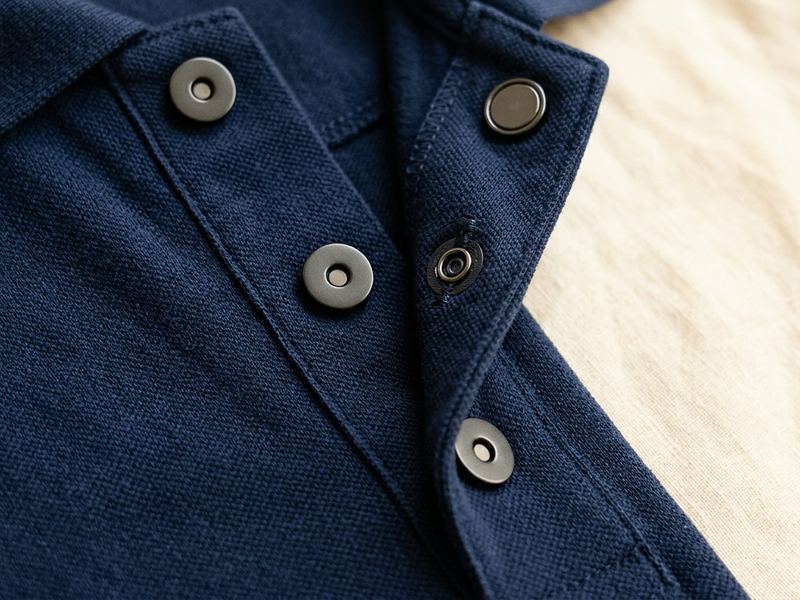
Our magnetic-button polo shirt looks like a standard polo but uses hidden magnetic closures instead of buttons. The magnetic buttons are concealed behind traditional button covers, so the shirt is indistinguishable from a regular polo. This is one of our most popular arthritis-friendly products because it combines a classic style with effortless dressing.
Velcro Closures
Velcro (hook-and-loop) closures are the second-easiest option for arthritic hands. Press to close, peel to open—no fine motor skills needed. Velcro is adjustable, so you can set the fit to accommodate swelling or changes in body size. Our Velcro-closure cardigan uses Velcro for a cardigan that goes on as easily as a blanket and stays put all day.
Side Snaps
Side-snap closures use larger snap fasteners positioned at the side of the garment rather than the front. They require less precision than buttons and can be operated with the palm or side of the hand rather than fingertips. Our side-snap adaptive t-shirt is designed for people who can manage snaps but not front buttons.
Pull-On Waists
Pull-on waistbands eliminate zippers and buttons entirely. An elastic or stretch waistband simply pulls up—no fastening at all. Our stretch pull-on trousers and soft stretch adaptive shorts use this approach for maximum ease.
Best Fabrics for Arthritic Joints
Fabric choice matters as much as closure choice for arthritis-friendly clothing. Stiff, rigid fabrics require more force to manipulate and do not accommodate swollen joints. Soft, stretchy fabrics move with the body and reduce the effort needed to put on and wear clothing. Look for:
- Stretch cotton blends: Move with the body, reduce resistance when dressing, and are gentle on sensitive skin. Our stretch cotton side-zip pants are a perfect example.
- Soft stretch knits: Drape smoothly, do not bunch, and accommodate swelling. Our stretch knit joggers are made from this type of fabric.
- Tagless designs: Tags can irritate skin that is already sensitive from arthritis medications or inflammation. Look for tagless or printed-label garments.
- Machine-washable materials: Arthritis can make laundry tasks difficult, so choose fabrics that wash and dry easily without special care.
Avoid stiff denim, rigid cotton, and fabrics that do not stretch. These require more force to put on and can press painfully on swollen joints during wear.
Arthritis-Friendly Tops and Shirts
For people with hand or shoulder arthritis, tops are often the most challenging garment. Here are the best options, organized by closure type:
- Magnetic-closure polo: The magnetic-button polo is the easiest dress shirt to put on. Looks like a regular polo, fastens with magnets.
- Side-snap t-shirt: The side-snap t-shirt uses large side snaps that are easier to manage than front buttons.
- Velcro cardigan: The Velcro cardigan is a layering piece that opens and closes with a simple press.
- Open-back blouse: The open-back blouse fastens at the shoulders, eliminating the need to reach behind the back.
- Pull-over sweatshirt: The crew neck sweatshirt has no closures at all—just pull it on.
Start with the style you wear most often and replace it with the arthritis-friendly version. If you wear polos frequently, the magnetic polo is your first purchase. If t-shirts are your everyday go-to, the side-snap version is the priority.
Arthritis-Friendly Pants and Bottoms
Pants present two challenges for arthritis: fastening the waist and bending to pull them on. Arthritis-friendly bottoms solve both problems:
- Side-zip pants: The stretch cotton side-zip pants open fully along the side, so you can put them on without bending to pull them up. Zip from a seated position, and the pants are on.
- Pull-on trousers: The stretch pull-on trousers have an elastic waist—no zipper, no button, no snap. Just pull them up.
- Stretch joggers: The stretch knit joggers combine a pull-on waist with soft, stretchy fabric for maximum comfort and ease.
- Adaptive shorts: The soft stretch shorts are the easiest lower-body garment—pull on, no fastening, stretch fabric.
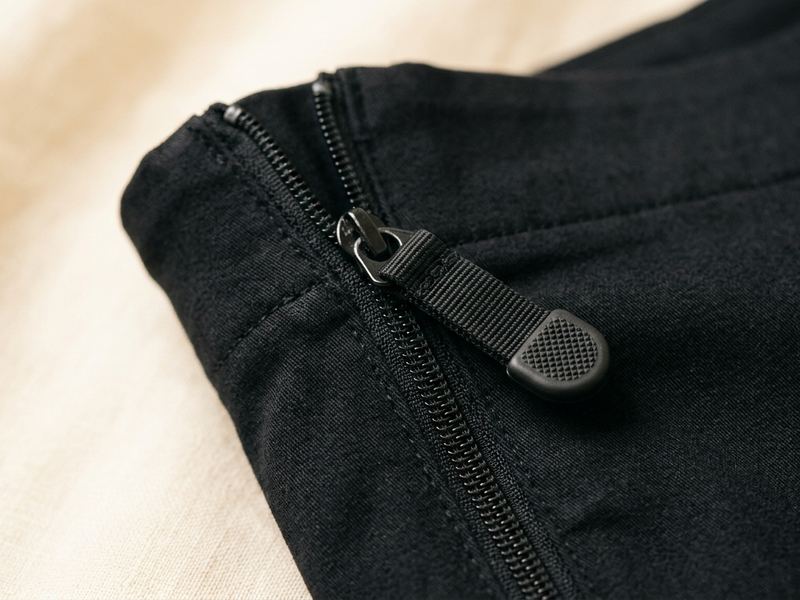
For hip or knee arthritis, side-zip pants are the most important investment. They eliminate the need to bend, twist, or reach to fasten a waistband. Pair them with a sock aid and a long-handle shoehorn, and the entire lower-body dressing routine can be completed from a seated position without bending.
Arthritis-Friendly Footwear
Footwear is critical for arthritis because arthritic feet are often swollen, sensitive, and difficult to reach. The best arthritis-friendly shoes have:
- Velcro closures instead of laces: Our wide Velcro sneakers are the easiest everyday shoe for arthritic hands.
- Wide fit to accommodate swelling: Our extra-wide diabetic slippers and adjustable slippers for swelling provide room for inflamed joints.
- Slip-on design for hands-free entry: Pair with a long-handle shoehorn for completely hands-free shoe dressing.
- Elastic no-tie laces for people who prefer lace-up styles: Our elastic no-tie laces convert any lace-up shoe into a slip-on.
- Orthotic-friendly design for custom support: Our orthotic-friendly dress shoes accommodate custom insoles.
For more detail on choosing the right shoes, read our guide to the best adaptive footwear for seniors and adults. The right shoes reduce fall risk, accommodate foot arthritis, and eliminate the need to bend or tie laces.
Dressing Aids for Arthritis
Clothing alone may not solve every dressing challenge. Dressing aids are inexpensive tools that extend reach, amplify grip, and eliminate bending. For arthritis, the most useful aids are:
- Button hook: Our button hook and zipper pull lets you fasten buttons without pinching. The ergonomic handle is comfortable for arthritic hands.
- Sock aid: Our sock aid lets you put on socks without bending—essential for hip and knee arthritis.
- Long-handle shoehorn: Our 24-inch shoehorn eliminates bending to put on shoes.
- Dressing stick: Our dressing stick helps pull clothing over limbs without reaching or bending.
- Zipper pull: Our metal ring zipper pull adds a large ring to any zipper, making it easy to operate with minimal hand strength.
Read our complete guide to essential dressing aids for independent living for more detail on how each tool works and which one to start with.
Building an Arthritis-Friendly Wardrobe
You do not need to replace your entire wardrobe at once. Here is a practical plan for building an arthritis-friendly wardrobe gradually:
Phase 1: Solve the Biggest Pain Points (Week 1-2)
Start with the two items that cause the most pain during dressing. For most people with arthritis, these are:
- A magnetic-closure top to replace buttoned shirts
- Velcro-closure sneakers to replace lace-up shoes
These two changes alone can transform your morning routine. Add a button hook for any remaining buttoned shirts you are not ready to replace.
Phase 2: Address Lower-Body Dressing (Week 3-4)
Replace your most-worn pants with an arthritis-friendly version:
- Side-zip pants for dressier occasions
- Stretch joggers for casual wear
Add a sock aid and long-handle shoehorn to eliminate bending for socks and shoes.
Phase 3: Add Layering and Outerwear (Week 5-6)
Complete your wardrobe with arthritis-friendly layering pieces:
- Velcro cardigan for easy layering
- Adaptive jacket for outerwear
- Crew neck sweatshirt for no-closure warmth
Phase 4: Expand and Rotate (Ongoing)
As you discover which adaptive features work best for your arthritis, add more pieces in the same style. Build a rotation of 5-7 tops, 3-4 bottoms, and 2-3 pairs of shoes so you always have clean, comfortable, easy-to-wear options. Browse our full adaptive clothing collections to expand your wardrobe.
Frequently Asked Questions
What type of clothing is best for arthritis?
The best clothing for arthritis features magnetic closures, Velcro fasteners, side zippers, pull-on waists, and soft stretch fabrics. These features eliminate the need for fine motor pinching, reduce the range of motion required for dressing, and accommodate swollen or stiff joints. Look for relaxed fits and tagless designs that do not irritate sensitive skin.
Are magnetic closures easier than buttons for arthritis?
Yes. Magnetic closures require only proximity to connect—bring the two sides near each other and the magnets align and snap together. No pinching, twisting, or threading through a buttonhole is needed. This makes magnetic closures significantly easier for people with reduced hand strength, limited finger dexterity, or joint pain in the hands and fingers.
What shoes are best for arthritic feet?
The best shoes for arthritic feet have wide toe boxes, adjustable Velcro closures, soft stretch uppers, and orthotic-friendly insoles. Avoid shoes that require tying laces or bending to fasten. Velcro sneakers, wide-fit slippers, and slip-on adaptive footwear are all excellent choices. Look for styles that accommodate swelling and do not press on sensitive joints.
How can I make dressing easier with arthritis?
Start by replacing the most difficult clothing items first—typically buttoned shirts and lace-up shoes. Switch to magnetic-closure tops, pull-on or side-zip pants, and Velcro footwear. Add dressing aids like a button hook, long-handle shoehorn, or sock aid for steps that remain challenging. Dress during your most flexible time of day, and sit down while dressing to reduce balance strain.
Can arthritis-friendly clothing look normal?
Yes. Modern arthritis-friendly clothing is designed to look like regular fashion. Magnetic closures are hidden behind button-style covers, Velcro is discreetly placed, and stretch fabrics look like standard materials. Our adaptive clothing is indistinguishable from mainstream fashion—friends and colleagues will notice the style, not the accessibility features.
Conclusion
Arthritis does not have to make dressing a daily ordeal. With the right closures, fabrics, and dressing aids, you can maintain an independent dressing routine that is faster, less painful, and more dignified. The key is to start with the garments that cause the most difficulty, replace them with arthritis-friendly alternatives, and build gradually from there. Magnetic closures eliminate button pain. Pull-on and side-zip pants eliminate bending. Velcro footwear eliminates tying. Soft stretch fabrics accommodate swelling and stiffness. Each change removes one more barrier from your morning routine.
Explore our adaptive tops, adaptive bottoms, adaptive footwear, and dressing aids to start building your arthritis-friendly wardrobe today. If you need help choosing the right pieces for your specific type of arthritis, contact our team through the contact page. Every joint you protect during dressing is a joint that has more strength left for the activities you love.