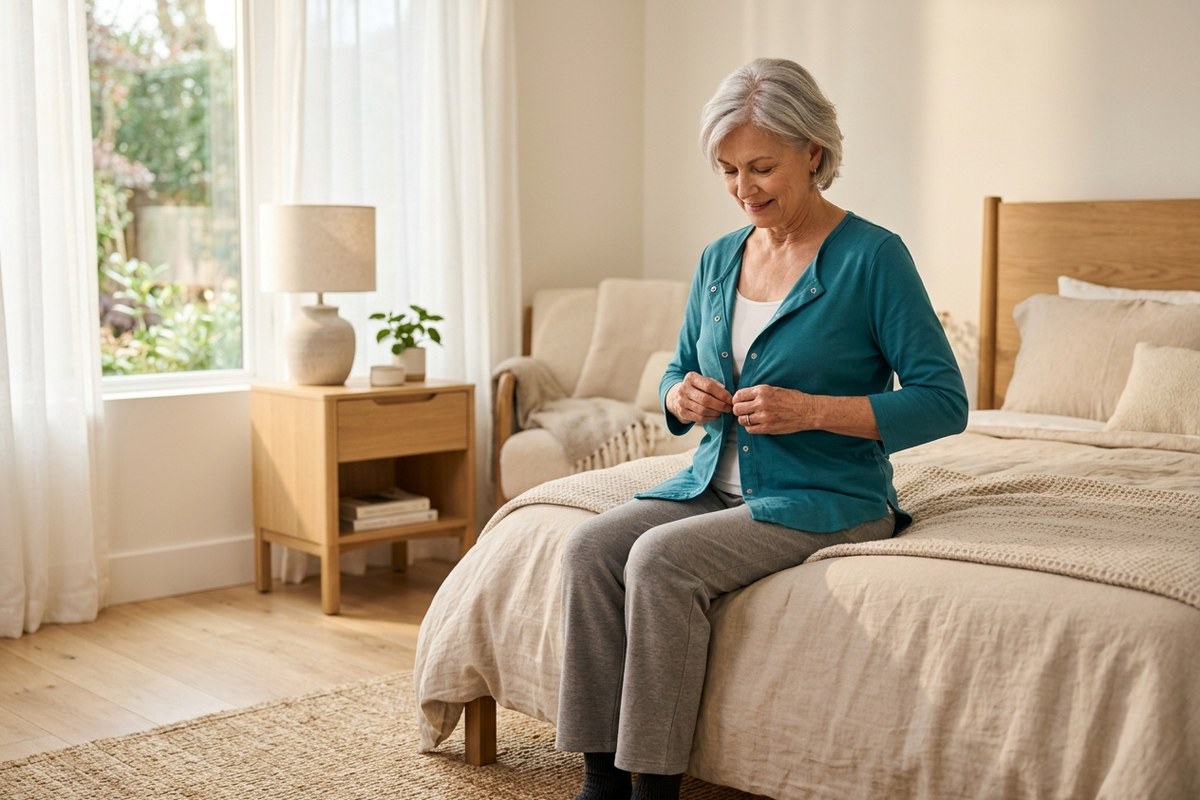
For many adults and seniors, the hardest part of getting dressed is not the clothing itself—it is the reaching, bending, pinching, and pulling that traditional garments demand. Buttons the size of a pea, zippers with tiny metal pulls, socks that require deep bending to reach the foot—these are the small obstacles that can turn a five-minute routine into a frustrating, painful, or even impossible task.
Dressing aids are simple, purpose-built tools that bridge the gap between your body's current range of motion and the clothing you want to wear. They do not replace adaptive clothing; they complement it. Together, the right garments and the right tools can restore a dressing routine that feels manageable, private, and self-directed. At Inn Adaptive Apparel, we offer both adaptive clothing and the dressing aids that pair with them, because independence works best when every part of the routine is supported.
Table of Contents
- What Are Dressing Aids?
- Dressing Sticks: Reach Without Bending
- Button Hooks and Zipper Pulls
- Sock Aids: Pull On Socks Without Bending
- Long-Handle Shoehorns
- Elastic No-Tie Shoelaces
- Dressing Gloves for Grip Assistance
- Buying Guide: How to Choose the Right Dressing Aid
- Pairing Dressing Aids With Adaptive Clothing
- Frequently Asked Questions
- Conclusion
What Are Dressing Aids?
Dressing aids are assistive tools designed to reduce the physical demands of putting on and taking off clothing. They extend reach, amplify grip strength, eliminate the need for fine motor pinching, and reduce bending. Most dressing aids are inexpensive, lightweight, and require no installation or power source—making them some of the most practical accessibility investments you can make.
Occupational therapists have recommended dressing aids for decades. They are used in rehabilitation settings, post-surgery recovery, arthritis management, stroke recovery, and daily living for people with permanent mobility limitations. But you do not need a prescription or a clinical setting to benefit from them. If reaching, bending, or fastening is difficult, a dressing aid can help.
The key is matching the right tool to the right problem. Someone with excellent hand strength but limited shoulder mobility needs a different aid than someone with full range of motion but severe arthritis in their fingers. Below, we break down each category of dressing aid, what it does, and who it helps most.
Dressing Sticks: Reach Without Bending
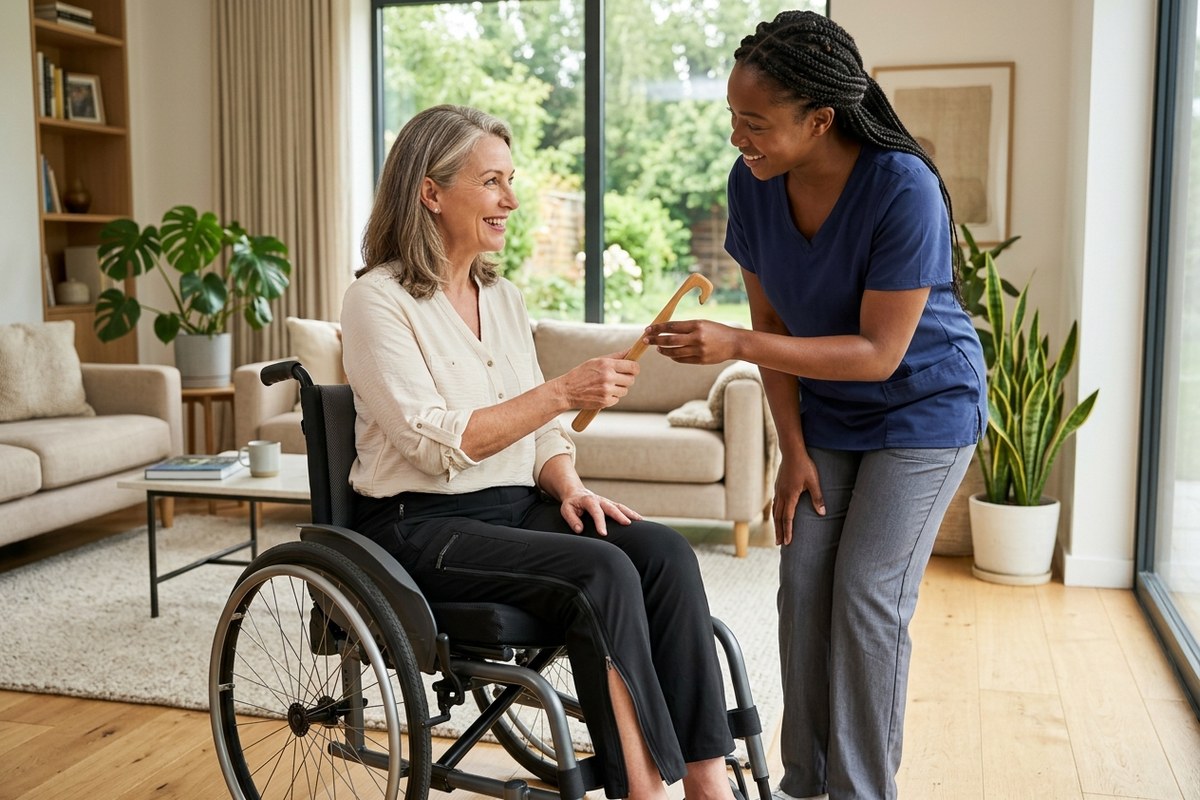
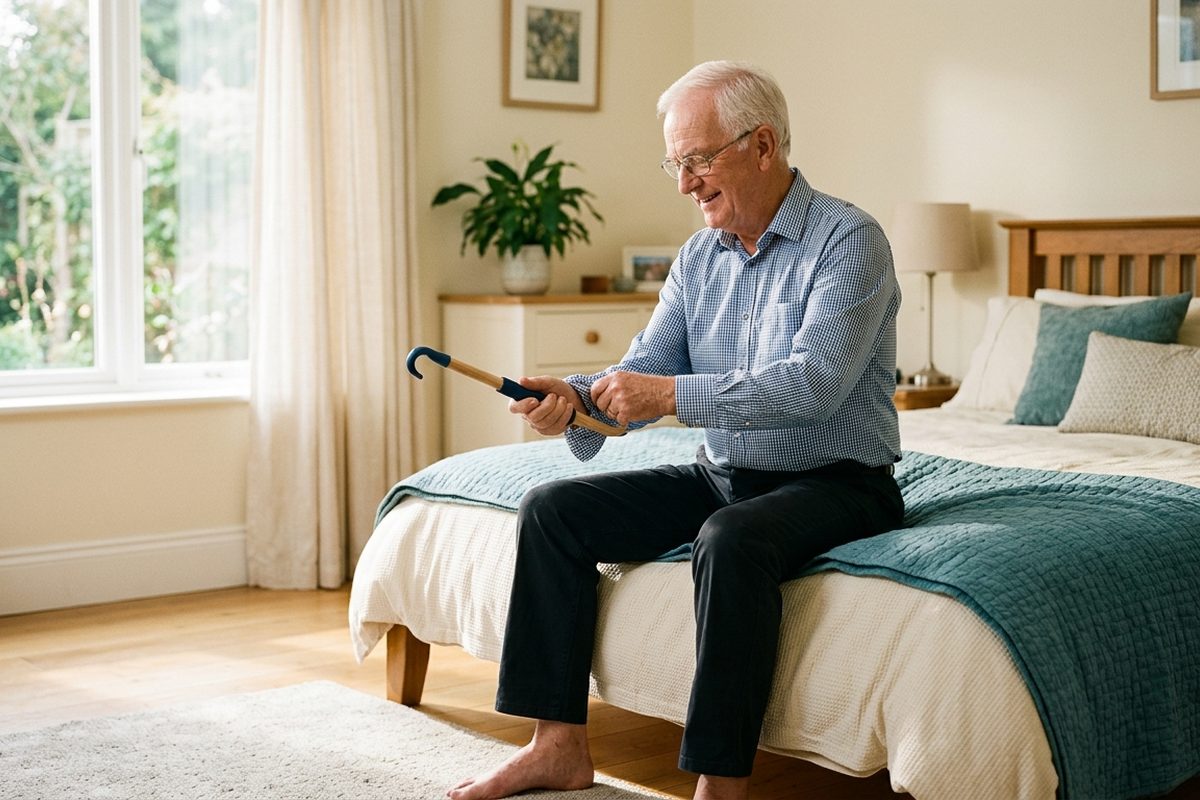
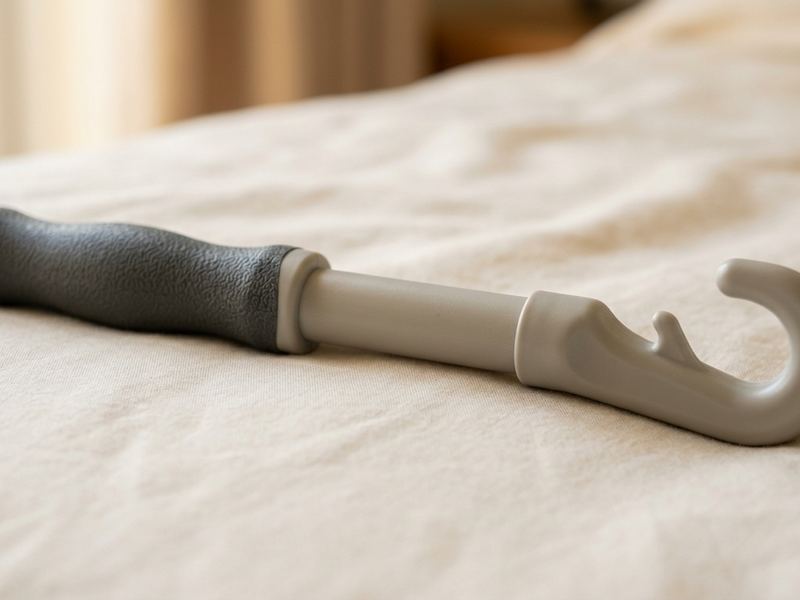
A dressing stick is a lightweight rod—typically 24 to 30 inches long—with a hooked or curved end. The hook catches fabric and pulls it toward you, so you can guide a shirt sleeve over your arm, pull pants up over your hips, or push a garment off your shoulders without reaching behind your back.
Dressing sticks are most useful for people with:
- Limited shoulder mobility from arthritis, frozen shoulder, or rotator cuff injuries
- Post-surgery restrictions that prevent raising arms overhead (such as after hip surgery or cardiac procedures)
- Balance concerns that make bending forward risky
- Wheelchair users who need to adjust clothing from a seated position
Our ergonomic dressing stick features a non-slip grip and a smooth plastic hook that will not snag fabric. At 24 inches, it provides enough reach for most seated or standing dressing tasks without being unwieldy. The lightweight construction means it can be used with minimal hand strength.
How to use a dressing stick: Hook the end into the far side of a shirt collar or sleeve opening. Pull the garment toward you while sliding your arm through. For pants, hook the waistband and pull upward. For removing clothing, push the stick against the fabric to slide it off your shoulders or hips. Practice with a loose-fitting garment first to get the feel of the hook.
Button Hooks and Zipper Pulls
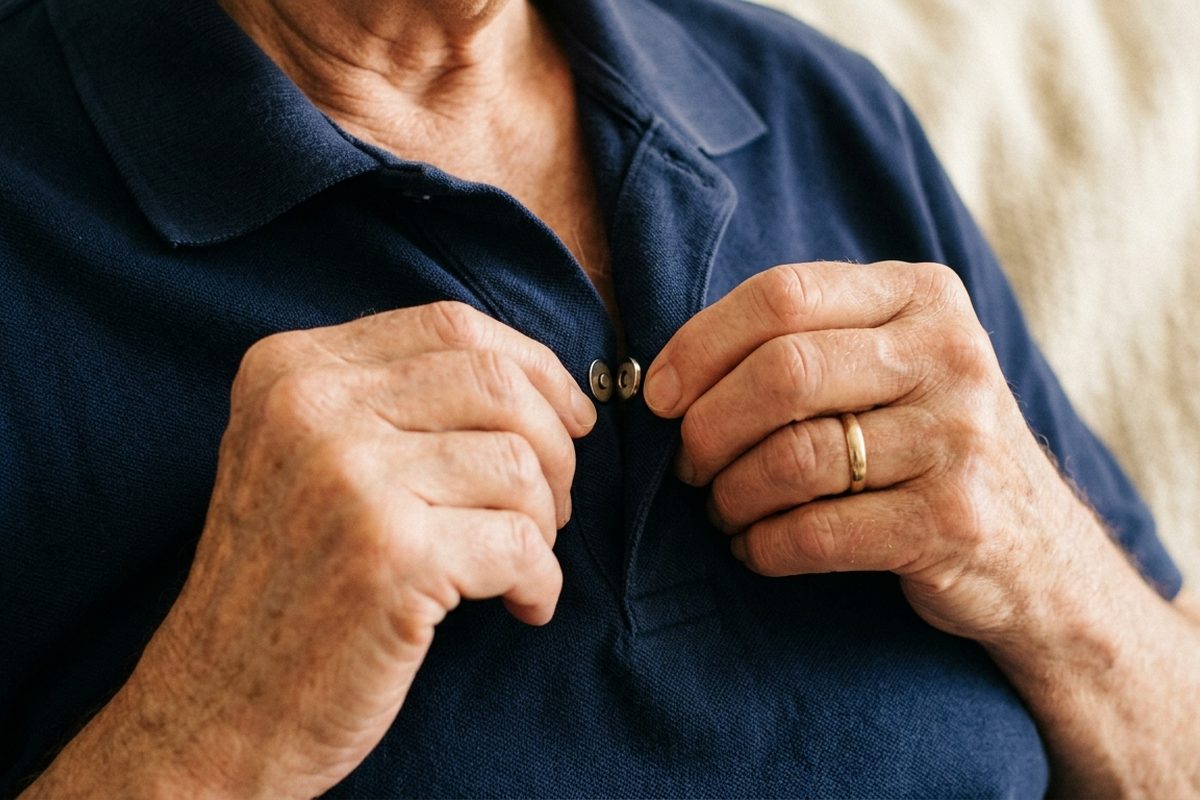
Buttons and zippers are two of the most common dressing challenges for people with hand arthritis, neuropathy, tremors, or reduced grip strength. A standard shirt button requires a precise pinch-and-twist motion that many hands simply cannot perform reliably. Zippers often have metal pulls too small to grip with stiff fingers.
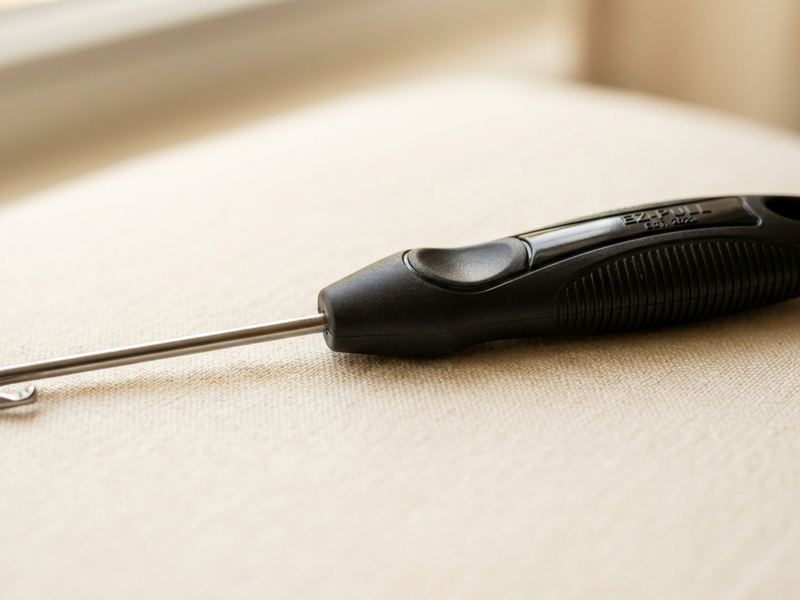
Button hooks have a thin wire loop that slides through the buttonhole, hooks around the button, and pulls it through. The handle is thick and ergonomic, so the user holds a comfortable grip rather than pinching a tiny button. Our button hook and zipper pull combo combines both functions in one compact 6.5-inch tool.
Zipper pulls attach a large ring or tab to an existing zipper, making it easy to grasp and pull with minimal finger dexterity. Our metal ring zipper pull adds a sturdy, oversized ring that can be hooked with a finger, dressing stick, or even a thumb—no pinch required. It works on jackets, pants, bags, and any garment with a standard zipper.
For people with arthritis, these tools can be transformative. Instead of avoiding buttoned shirts or asking a caregiver for help, a button hook user can manage buttons independently. Pair a zipper pull with adaptive outerwear like our adaptive jacket with easy-pull zipper, and the entire layering process becomes manageable from start to finish.
Sock Aids: Pull On Socks Without Bending
Putting on socks requires bending to the foot, reaching the toes, and pulling the sock up—all of which can be difficult or impossible after hip surgery, with lower back pain, or during late pregnancy. A sock aid solves this by holding the sock open while you slide your foot in, then guiding the sock up your leg with attached pull cords.
Our nylon compression sock aid is designed for both regular and compression socks. The smooth nylon surface reduces friction so socks slide on easily, and the long pull straps let you dress while sitting upright without bending forward.
How to use a sock aid: Slide the sock onto the aid's trough with the opening facing up. Drop the sock and aid on the floor in front of your foot. Slide your foot into the opening, then pull the straps upward to guide the sock onto your foot and ankle. With practice, the entire process takes under 30 seconds.
Long-Handle Shoehorns
A shoehorn is one of the oldest dressing aids, and for good reason—it works. A long-handle shoehorn lets you slide your foot into a shoe while seated or standing without bending down to hold the shoe's heel counter. This is especially valuable after hip replacement surgery, when bending past 90 degrees is restricted, or for anyone with balance concerns.
Our 24-inch stainless steel shoehorn provides enough length to use from a seated or standing position. The ergonomic grip is comfortable for arthritic hands, and the stainless steel construction will not flex or break under pressure. Unlike plastic shoehorns that can snap, this tool is built for daily, long-term use.
Pair a long-handle shoehorn with slip-on or Velcro-closure footwear like our wide Velcro sneakers or adjustable slippers for swelling, and the entire shoe routine becomes hands-free at the foot level—no bending, no tying, no struggling with stiff heels.
Elastic No-Tie Shoelaces
For people who prefer lace-up shoes but cannot tie laces reliably, elastic no-tie laces convert any lace-up shoe into a slip-on. The elastic cord stretches to let the foot slide in, then contracts to hold the shoe snugly. Once installed, the laces never need to be tied again.
Our elastic no-tie shoelaces are adjustable, so you can set the tension once and forget about them. They work with any shoe that has standard eyelet lacing. For people with arthritis, tremors, or one-handed dressing needs, this is one of the simplest, most cost-effective dressing aids available.
Dressing Gloves for Grip Assistance
Sometimes the challenge is not reaching or fastening—it is gripping. Smooth fabrics, tight waistbands, and compression garments can be difficult to pull on when your hands slide off the fabric. A dressing glove provides a textured, non-slip surface that grips fabric securely with minimal pressure.
Our silicone dressing glove is ergonomically designed with a silicone palm surface that grips fabric without snagging. It is particularly helpful for pulling on compression socks, tight athletic wear, or adaptive garments with snug cuffs. The glove fits either hand and is available in small through large.
Buying Guide: How to Choose the Right Dressing Aid
With so many dressing aids available, it helps to start with the specific dressing step that causes the most difficulty. Here is a practical framework for choosing:
Step 1: Identify Your Biggest Bottleneck
Think about your morning routine. Which step takes the longest, causes the most pain, or requires the most help? Common answers include:
- Reaching to pull clothing over shoulders or behind the back → Start with a dressing stick
- Fastening buttons or pulling zippers → Start with a button hook and zipper pull
- Bending to put on socks → Start with a sock aid
- Sliding feet into shoes → Start with a long-handle shoehorn or elastic no-tie laces
- Gripping smooth or tight fabric → Start with a dressing glove
Step 2: Consider Your Hand Strength and Dexterity
Most dressing aids are designed for people with reduced grip strength, but some require more dexterity than others. A button hook requires a steady hand to guide the wire loop through the buttonhole. A sock aid requires only the ability to pull two straps. If your hand function is very limited, prioritize tools with large handles, pull cords, or hands-free operation.
Step 3: Think About Seated vs. Standing Dressing
If you dress while seated—whether in a wheelchair, on a bed, or in a chair—choose tools with longer handles that work from that position. A 24-inch dressing stick or shoehorn is typically long enough for seated use. If you stand but have balance concerns, a sock aid eliminates the need to bend, which is one of the highest-risk movements for falls.
Step 4: Start With One or Two Aids
You do not need every dressing aid at once. Start with the one or two that address your most frustrating dressing steps. Many people find that solving one bottleneck—whether it is socks, buttons, or shoes—makes the entire routine feel more manageable. You can always add more tools as your needs evolve.
Pairing Dressing Aids With Adaptive Clothing
Dressing aids work best when paired with adaptive clothing that is already designed for easier dressing. Here are some powerful combinations:
- Dressing stick + side-zip pants: The stick helps pull the waistband over hips; the side zipper eliminates the need to bend to fasten. Browse our adaptive pants and bottoms.
- Button hook + magnetic-closure polo: Even with a button hook, magnetic closures are faster. But for traditional buttoned shirts, the hook makes them manageable. See our adaptive tops and shirts.
- Sock aid + wide-opening adaptive footwear: Once the sock is on, a wide-opening shoe with Velcro closure lets you finish without bending. Explore our adaptive footwear collection.
- Shoehorn + slip-on adaptive slippers: The shoehorn guides the foot in; the slip-on design means no fastening at all. Try our extra-wide diabetic slippers.
Browse our complete range of dressing aids and assistive tools to find the right combination for your routine. Every tool we carry has been selected for durability, comfort, and real-world usability—not clinical novelty.
Frequently Asked Questions
What is a dressing stick and how does it help?
A dressing stick is a lightweight tool with a hooked end that helps pull clothing over limbs without bending or reaching. It is especially useful for people with limited shoulder mobility, post-surgery restrictions, or balance concerns who cannot safely lean forward or raise their arms overhead.
Can dressing aids be used by people with severe arthritis?
Yes. Dressing aids like button hooks, zipper pulls with large rings, and sock aids are specifically designed for people with reduced hand strength and limited fine motor control. Ergonomic grips and large handles reduce the pinch force needed to operate buttons, zippers, and small fasteners.
Which dressing aid should I buy first?
Start with the dressing step that causes the most difficulty. If reaching is the problem, a dressing stick is the priority. If buttons are painful, a button hook. If socks are hard to pull on, a sock aid. If shoes are the challenge, a long-handle shoehorn or elastic no-tie laces. Identify your biggest bottleneck first.
Are dressing aids covered by insurance or Medicare?
Dressing aids are typically sold as out-of-pocket purchases and are not covered by Medicare Part B, which focuses on durable medical equipment like wheelchairs and walkers. Some flexible spending accounts (FSAs) or health savings accounts (HSAs) may reimburse dressing aids when prescribed by a healthcare provider. Check with your plan administrator.
How long do dressing aids last?
Quality dressing aids are built for daily use and typically last several years. Plastic and stainless steel components resist moisture and wear. Replace a dressing aid if the grip becomes worn, the hook loses its shape, or any part shows cracking that could snag clothing or skin.
Conclusion
Dressing aids are small tools with a large impact. They extend reach, amplify grip, eliminate bending, and make fastening manageable—turning a routine that required assistance into one you can handle yourself. Whether you are recovering from surgery, managing arthritis, or simply finding that some dressing steps have become harder than they used to be, the right aid can make a measurable difference from the very first use.
Start with the step that frustrates you most. Add a dressing aid that addresses it directly, pair it with adaptive clothing that works with your body, and build from there. Independence in dressing is not about doing everything the old way—it is about having the right tools to do it your way. Explore our full collection of dressing aids and assistive tools, or reach out through our contact page if you need help choosing the right tool for your specific needs.